The mistake is treating the group as one
When a head-office visit is announced, the first instinct is usually to find one place for everybody. That is understandable: it simplifies logistics and produces a single invoice. But the group is rarely homogeneous, and the solution that suits one half tends to be wrong for the other.
In practice a visit like this arrives with two very different profiles: people who will spend the day at a plant or on site, and people who came for meetings, to review numbers or to sign something. Their lodging needs have almost nothing in common.
Who the whole house works well for
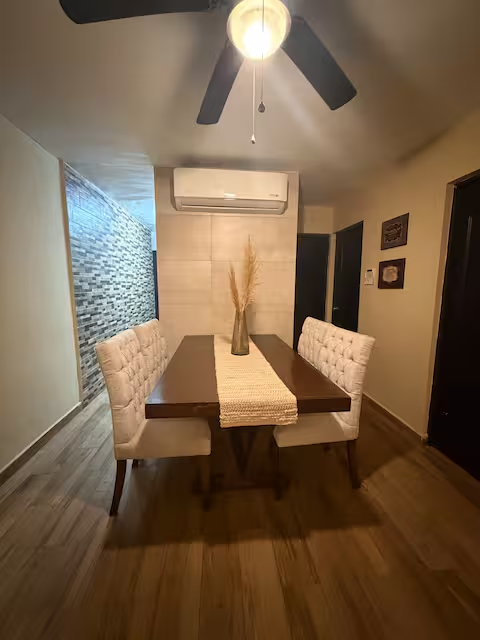
The house works well for the technical group: people leaving early for the same site, coming back late, wanting to eat without going out again, and preferring to stay together so they can plan the next day. With a full kitchen, a washer and parking, that part of the group covers a whole day without depending on anyone.
It also works well when the group stays for weeks. At that length the house stops being an alternative to a hotel and becomes the sensible option: work clothes get washed, meals get cooked, and the stay is invoiced as one property instead of as separate rooms.
Who is probably better off in a hotel
We are direct about this because it saves both sides trouble. The house has one bathroom for up to seven guests, and there is no daily housekeeping and no front desk. A director coming for three nights with a full agenda and hotel expectations will almost always be better off in a hotel.
The same applies if that person needs to receive an outside visitor, hold meetings where they are staying, or come and go at hours that match nobody else in the group. The house is lodging, not an office, and forcing it to be one ends badly.
Splitting is less administrative work than it sounds
The usual objection to splitting a group is administrative: two suppliers, two invoices, two approval flows. In practice it is a smaller problem than it looks, because the hotel is already an approved supplier at most companies, and the house resolves into one invoice for the whole period rather than per person or per night.
What is worth settling first is who receives each invoice and whether both go to the same cost centre. If one entity pays for the technical group and another for the directors, say so when you request conditions so it is not discovered at close.
How to decide, in one sentence
The rule that has worked best for us: whoever will actually live in the lodging stays at the house; whoever will only sleep there between meetings stays at a hotel. If somebody is going to cook, do laundry, travel as a group and coordinate with the others, the house adds something. If they will arrive late, sleep and leave early alone, the hotel adds more.
If you are not sure how your group splits, send us the length of the visit, the headcount and what each block will be doing during the day. We will tell you honestly which part of the group fits here and which does not, even when that means you book less.